Salt Bricks
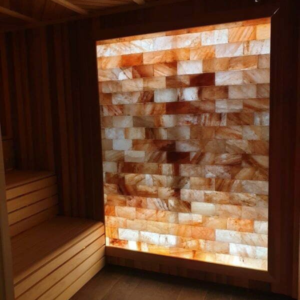
Himalayan salt bricks are solid 8 × 4 × 2 inch blocks of natural pink rock salt. Use them for grilling and serving, or stack and glue them into glowing salt walls, sauna panels, bar fronts and partitions.
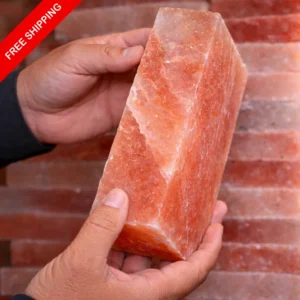
Pink Salt Block 8×4×2 – Salt Block for Cooking Food, Grilling
This pink salt block for grilling measures 8×4×2 inches and comes from 100% natural Himalayan salt. Sear steak, cook seafood, chill desserts or build a sauna wall. Buy one or bulk packs.
What Are Himalayan Salt Bricks?
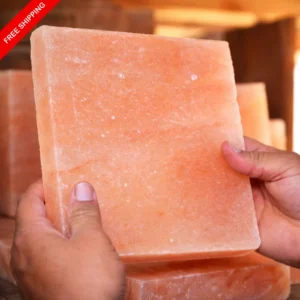
Himalayan salt bricks are solid blocks of natural pink rock salt cut to about 8 × 4 × 2 inches. Each weighs roughly 5 lb (2.3 kg). Cooks heat them on grills to sear food, while builders stack them into glowing walls, sauna panels and bar fronts. Moreover, their thickness gives a deep, rich glow when backlit. They are the most versatile salt product we sell.Which Brick Options Are Available?
One brick size, many quantities.| Product | Size | Options |
|---|---|---|
| Pink salt block 8×4×2 | 8 × 4 × 2 in, about 5 lb | Single bricks up to bulk packs |
How Do You Cook on a Salt Brick?
Heat it slowly. Salt can crack if heated too fast.- First, place the dry brick on the grill grate.
- Next, heat on low for about 15 minutes.
- Then raise to medium for 15 minutes.
- After that, go to high for 15 minutes or more.
- Finally, sear thin-sliced meat, shrimp or vegetables.
How Do You Build with Salt Bricks?
Like masonry, but dry. Bricks can be laid face-out (showing the 8 × 4 face) or edge-out for a thicker look. For example:- Backlit salt walls in spas and lounges.
- Dry sauna back walls and bench fronts.
- Bar fronts and reception desks.
- Freestanding partitions, on proper footings.
- Garden and patio features, under cover.
How Many Bricks Do You Need?
About 4.5 bricks per square foot when laid face-out. Therefore, a 4 × 5 ft wall (20 sq ft) needs about 90–100 bricks. Moreover, that wall would weigh roughly 450–500 lb, so the structure must be solid. In addition, plan about 3 units of adhesive per 100 bricks. Add a few spares for cuts.What Can You Cook on Salt Bricks?
Quick-cooking foods work best. For example, thin-sliced steak, lamb, shrimp, scallops and salmon sear beautifully on a hot brick. Moreover, asparagus, peppers and mushrooms pick up a light, even seasoning. In addition, pineapple and peaches caramelize nicely for dessert. Therefore, pat food dry and cook fast, since wet food absorbs more salt. You can also chill a brick to serve cheese, sushi or chocolate. One brick, many meals.Should You Backlight a Brick Wall?
Most people do. Warm LED strips behind or above the bricks make the salt glow amber and rose. Moreover, thick bricks glow deeper than thin tiles, so the effect looks rich and warm. In addition, LEDs run cool and use little power. Therefore, plan wiring before building. Light makes the wall come alive.How Do You Cut Salt Bricks?
With a fine saw and patience. Mark the cut, then saw slowly to avoid chipping. Also, wear a dust mask and eye protection. In addition, keep offcuts for small gaps. Neat cuts give a professional finish.Bricks or Tiles: Which Should You Choose?
It depends on the project. Bricks are 2 inches thick, very solid and glow deeply. In contrast, tiles are 0.75–1 inch thick and much lighter, which suits wall cladding. Therefore, choose bricks for freestanding features, saunas and cooking. Choose Himalayan salt tiles for lighter walls. As our team says, “Tiles dress a wall; bricks build one.”What Backing Do Brick Walls Need?
A strong one. Because bricks are heavy, fix cement board or masonry backing securely to studs, or build on a solid floor. Moreover, check floor load for large installations. In addition, never rely on drywall alone. A licensed contractor is wise for big walls. Safety first.Why Use Salt Brick Adhesive?
To avoid water damage. Wet cement mortar can dissolve and stain salt. In contrast, salt brick adhesive bonds with far less moisture. Therefore, joints stay crisp and clean. See our salt brick adhesive range.Do Salt Bricks Have Health Benefits?
None that are well proven. Salt rooms inspired by speleotherapy are popular for relaxation, but strong evidence for medical benefits is lacking. Similarly, cooking on salt adds flavor, not nutrition. Therefore, enjoy bricks for cooking and design. Honest and simple.Where Does the Salt Come From?
From Pakistan. Our bricks are cut from rock salt mined in the Salt Range near the Khewra Salt Mine. According to Wikipedia’s Himalayan salt article, it is mostly sodium chloride with trace minerals that give its pink tones. It is a natural form of halite. Every brick is unique.How Do You Care for Salt Bricks?
Keep them dry. For cooking bricks, let them cool, scrape, wipe with a damp cloth and dry fully. For walls, run the lights often and dust with a dry brush. Moreover, never soak salt in water. In addition, store spare bricks somewhere dry. They last for years.Why Buy from Himalayan Salt Zone?
We specialize in salt. Himalayan Salt Zone supplies salt bricks, tiles, adhesive and cookware to homes, restaurants, spas and contractors across the USA. Moreover, we pack heavy orders carefully and offer freight quotes. Ask us anything.Salt Bricks: Frequently Asked Questions
How big and heavy is a salt brick?
Each brick measures about 8 × 4 × 2 inches and weighs roughly 5 lb (2.3 kg).
Can I cook on a salt brick?
Yes, food-grade bricks can be heated slowly on a grill to sear meat and seafood, or chilled to serve cold foods.
How many bricks cover one square foot of wall?
About 4.5 bricks laid face-out (8 × 4 inch face) cover one square foot.
What is the difference between bricks and tiles?
Bricks are 2 inches thick and very solid; tiles are 0.75–1 inch thick and lighter, better for wall cladding.
What adhesive should I use?
Use salt brick adhesive, about 3 units per 100 bricks. Avoid wet cement mortar.